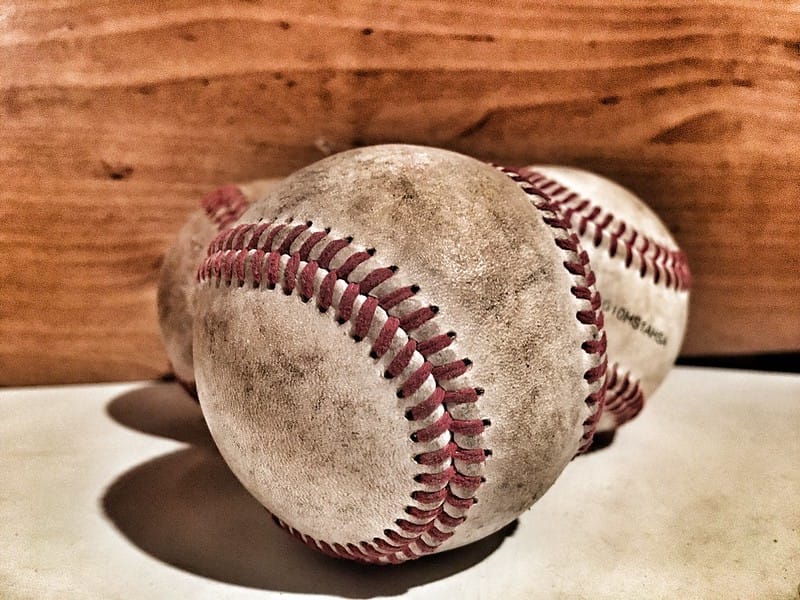
“Baseballs” by Sterling G, CC BY 2.0 (chainstogains.com)
In 2026, attention appears to be focused on sports, given the numerous global events scheduled to take place. For Dominicans and baseball fans, excitement is already building for the global celebration of their national sport.
In this context of jubilation, the streets of Santo Domingo, San Juan, Caracas, and even Tokyo will be filled with various displays of support for their respective national teams. Many brands will seek to connect with the public by alluding to numerous symbols, colors, and similarities. However, these and other elements are part of a system highly protected by industrial property, fair competition regulations, and even the protection of national symbols.
Why is sport an industrial property ecosystem?
Beyond a celebration of human discipline and talent, sporting events are commercial ecosystems. The actors involved invest significant time and money in building moments, affiliations, and brands that generate value, which then seeks protection.
The legal framework governing this is not singular; it is a combination of instruments: In the Dominican Republic, Law 20-00 on Industrial Property is the main instrument for the protection of trademarks and distinctive signs. Regionally, the Paris Convention, the WTO’s TRIPS Agreement, and the free trade agreements signed by Caribbean countries (including DR-CAFTA) impose minimum protection standards that member states are obliged to enforce. To this must be added copyright laws, which allow for the commercialization of retransmission rights and the entire advertising placement scheme surrounding the event.
What elements are effectively protected?
The regulation is not uniform, but rather a framework that protects both the visible elements of sport and the content that comprises its economic exploitation.
- Distinctive signs of sporting events or teams
Leagues, federations, Olympic committees, and interested parties protect these interests through the registration of their trademarks, names, logos, slogans, emblems, and even the sounds that distinguish tournaments (a very interesting example is the registration of the Champions League anthem with the European Union Intellectual Property Office).
- Colors combined with sports identity
A single color, such as blue, cannot be monopolized in absolute terms. However, when a specific combination of colors is systematically associated with a registered sports brand, and the commercial use of that combination creates confusion or undue exploitation of that reputation, an infringement may exist. The test applied by Industrial Property Administrations, such as ONAPI, usually reviews “similarities more than differences, which can lead to a risk of association for the average consumer”.[1]
- Broadcast rights: the most closely guarded territory in sports
A common mistake is to assume that because a game is being broadcast on open television or a public platform, the content is free to use. Broadcast rights are one of the most jealously protected forms of intellectual property in the sports ecosystem. Organizers of events like the World Baseball Classic negotiate multimillion-dollar contracts with networks and streaming platforms to grant them exclusivity to broadcast, reproduce, and distribute the audiovisual content of the tournament. These contracts are the financial heart of the event; without them, there is no funding infrastructure for the production of sporting events.
Broadcast rights are not limited to the communication of the event but also impact, for example, the public display of the broadcast in venues, bars, or restaurants. Similarly, broadcast rights also cover the publication of clips or images from sporting events to the extent that digital platforms such as Instagram, YouTube, and TikTok have automated systems for detecting protected content (Content ID and equivalents) that act independently of any local enforcement decision.
Conclusion
Regarding sports events, it is somewhat risky to assume that something is legal just because “everyone does it.” Enforcement can be selective, but when it comes, it comes swiftly and with consequences that can far outweigh the campaign’s benefits. It is always advisable to conduct an audit of any publication or campaign before its launch. Similarly, official communications from sports event organizers and national federations sometimes publish usage guidelines that define what is permitted for fans and third parties. This, in addition to consulting your in-house legal team, is crucial to prevent your business from being disqualified.
[1] ONAPI. Resolution No. 005-2023 dated 01/19/2023 regarding the application for registration of the AMSTEL BIER ULTRA (MIXED) trademark under file 2019-39531